
This summer, instead of our usual land tour vacation, we decided to book a National Geographic Expedition cruise through Greece, Albania, and Croatia. This 7-night, 8-day trip, in conjunction with Lindblad Expeditions, was on the National Geographic Orion, a small expedition ship. The Orion does sail various destinations throughout the year.
While I've cruised over 30 times, I wasn't quite sure what to expect on the Orion. It's a small ship, with capacity for 102 guests in 53 staterooms. Instead of a large theater and casino, you'll find a (mostly) open bridge, along with various lectures throughout your journey.
This ship is best for those interested in expedition travel and who want to travel on board a ship rather than stay in separate hotel rooms during the trip. It's both a relaxing and an adventurous experience, and I loved my stay on board. If you are considering a trip on the National Geographic Orion, here's what to expect.
Disclosure: We paid full price for our experience. This post may contain affiliate links, and a purchase through one of these links may result in a commission paid to us at no additional cost to you. All opinions are my own.
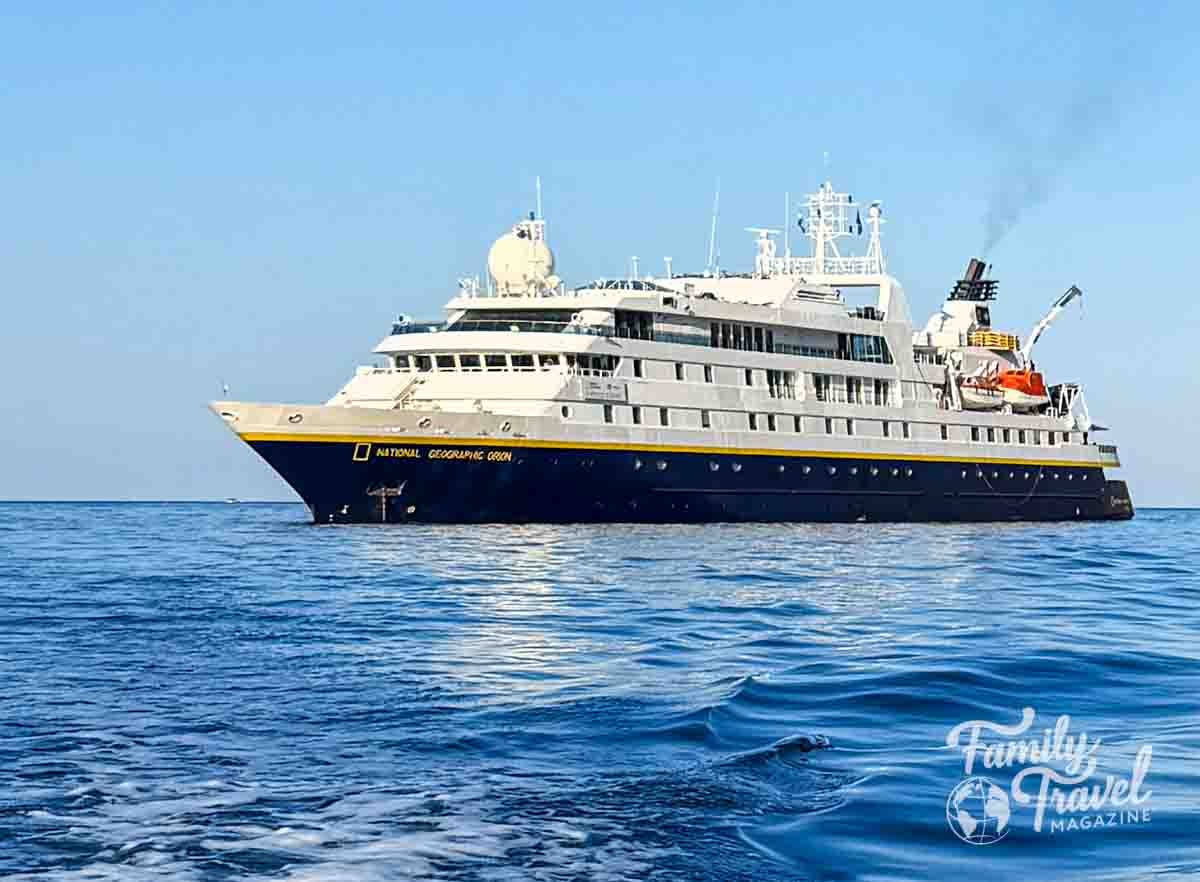
National Geographic Orion Review: What It's Like Onboard (Lindblad Expeditions)
Onboard the National Geographic Orion
The National Geographic Orion offers four passenger decks with staterooms on decks three, four, and five. It's easy to navigate, and there are no lines for elevators or stairs. The ship has two main staircases and one elevator, and you can easily go from one part of the ship to the other in a matter of a few minutes.
While we spent much of our time off the ship, we slept on board each night and ate most of our meals on board. There were several times when it was recommended that we go outside to see the view (particularly when we were traveling through the Corinth Canal), and there were plenty of spots to stand and take in the views. In addition, the bridge is almost always open (except when there's a pilot onboard or the captain has reason to close it), and you can go and see the ship's operations.
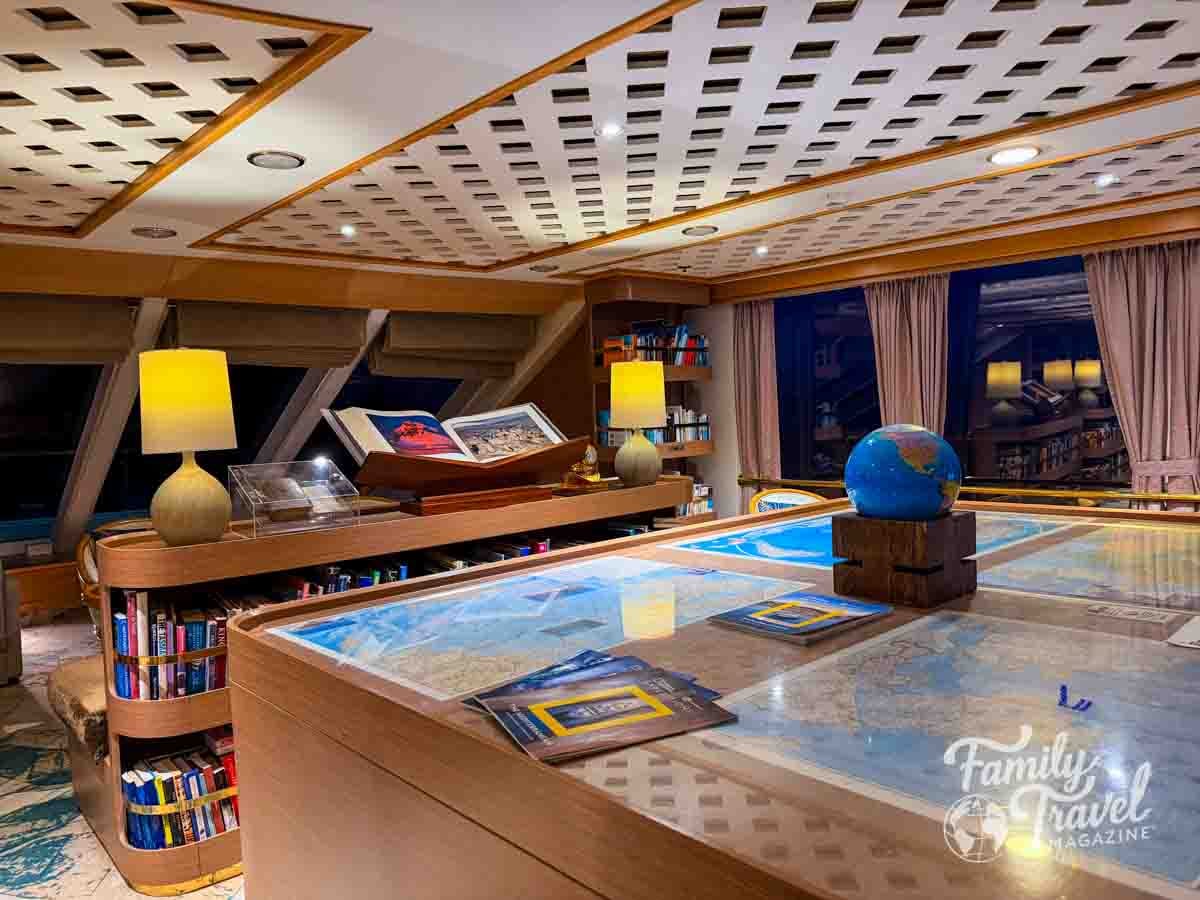
The ship definitely has an expedition and education focus, rather than an entertainment focus. But there are also several spots where guests can gather and socialize, including the observation deck/library, sundeck, lounge, and outdoor cafe.
Staff Onboard
This is truly where the National Geographic Orion shines. From the moment we entered the ship, the stateroom hosts, bartenders, and waiters made a dedicated effort to learn our names and preferences. It really made a huge difference in our experience on board and made us sad to leave. This level of service is above and beyond anything I've experienced on other ships.
Cabins Onboard the National Geographic Orion
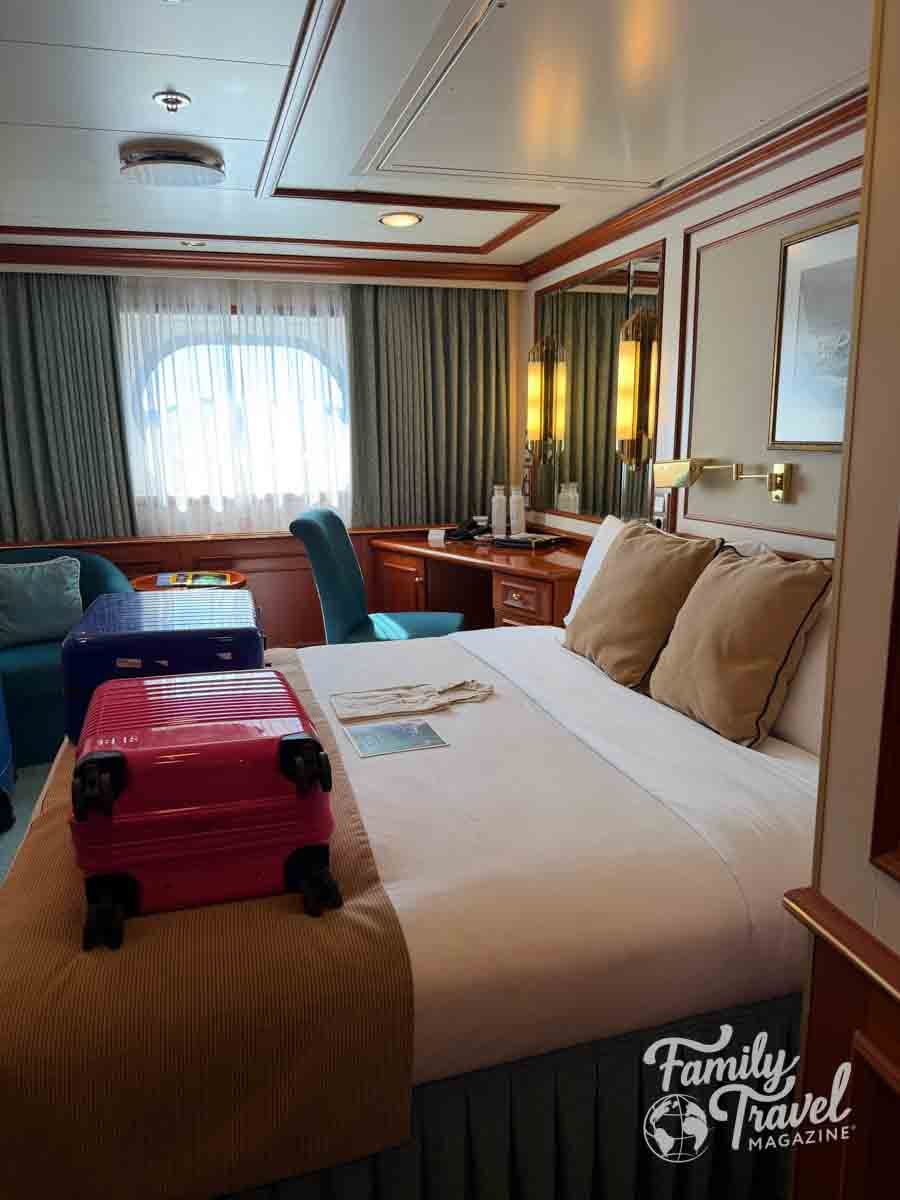
The National Geographic Orion offers 53 staterooms across three decks. None of these rooms have connecting doors.
When you book your National Geographic Expedition, the prices vary greatly depending on the stateroom you book. Think about this carefully, because you really won't be in the room that much.
Rooms in categories 1, 2, and 3 are located on the main deck (deck 3). These rooms have a queen bed that can be configured as two twins, a window or portholes, and are 175-180 square feet. Category 3 rooms are also on deck 4.
The bridge deck (deck 5) has several room categories (3S, 4, 5, and 6). Category 4 rooms still have a window, but are larger than categories 1, 2, and 3 (230 square feet). Category 5 rooms are similar to 4 but offer a shared balcony, while category 6 rooms are much larger and have a private balcony or floor-to-ceiling windows.
We booked two adjacent category 2 rooms and were very comfortable. I'd never been in a cabin without a balcony, but I really didn't miss it. We weren't in the room enough to need it, and there were plenty of spots on the ship to get outside if I wanted to.
There was plenty of room for us to store our clothes and belongings during our expedition. There are two small upright closets as well as drawers in several areas of the room. We unpacked as soon as we got to our room and stored our suitcases under the bed.
On the Orion, cabin doors aren't locked unless you request it. I loved how easy it was to just go into our room between excursions. There is a deadbolt to use when you are in the room.
Dining Onboard the Ship
We were really curious about how dining would work onboard the ship. I'd been on cruises with multiple restaurants and a buffet, but I couldn't imagine how meals would work on a ship with one restaurant and one outdoor cafe.
Like everything else on this trip, mealtimes were seamless. In the morning, there was an early-riser breakfast, typically set up in the observation lounge/library, with coffee and light bites. Then, a larger breakfast buffet opened up in the outdoor cafe for the main breakfast. On our excursion, it usually started at around 7 am.
Breakfast included things like yogurt, bagels, eggs, smoked salmon, fruit, breakfast potatoes, sausage, and bacon. There was also a cook-to-order omelet station and one specialty of the day (French toast, Eggs Benedict, pancakes, waffles, etc). Coffee and espresso drinks, as well as juices and water, were also available and served directly to you at the table.
Throughout the day, an espresso machine, tea, and juices were available in both the lounge and the library. The bar in the lounge was also open for espresso drinks, sodas, and alcoholic beverages.
With a few exceptions, lunch was served onboard in the cafe with a similar format to breakfast. I enjoyed the lunches on the ship the best. There was always a large selection of delicious food and desserts to choose from, including pasta, meats, salads, and soups.
On some days, depending on our plans, the chef also set up an afternoon tea in the lounge. This often included local specialties and desserts.
For dinner, there is one restaurant onboard, and everyone dines at the same time. Seating is open, so you can choose wherever you want to sit each evening. Every day, the evening menu was displayed in the hall outside the lounge. We were asked to select an entree at some point during the day so the chef could be prepared, although we could always change our minds at dinner time.
Like the other meals, dinner was always delicious. The menu typically included some local dishes, and while there isn't a kids' menu, there are options for picky eaters, like pasta, grilled chicken, and a chicken Caesar salad.
Disposable water bottles aren't offered on board or during the excursions. However, each guest is provided with their own refillable metal bottle, and refill stations are available throughout the ship. In addition, the guides would often bring a large cooler of drinking water on excursions so we could refill.
What To Expect Each Day
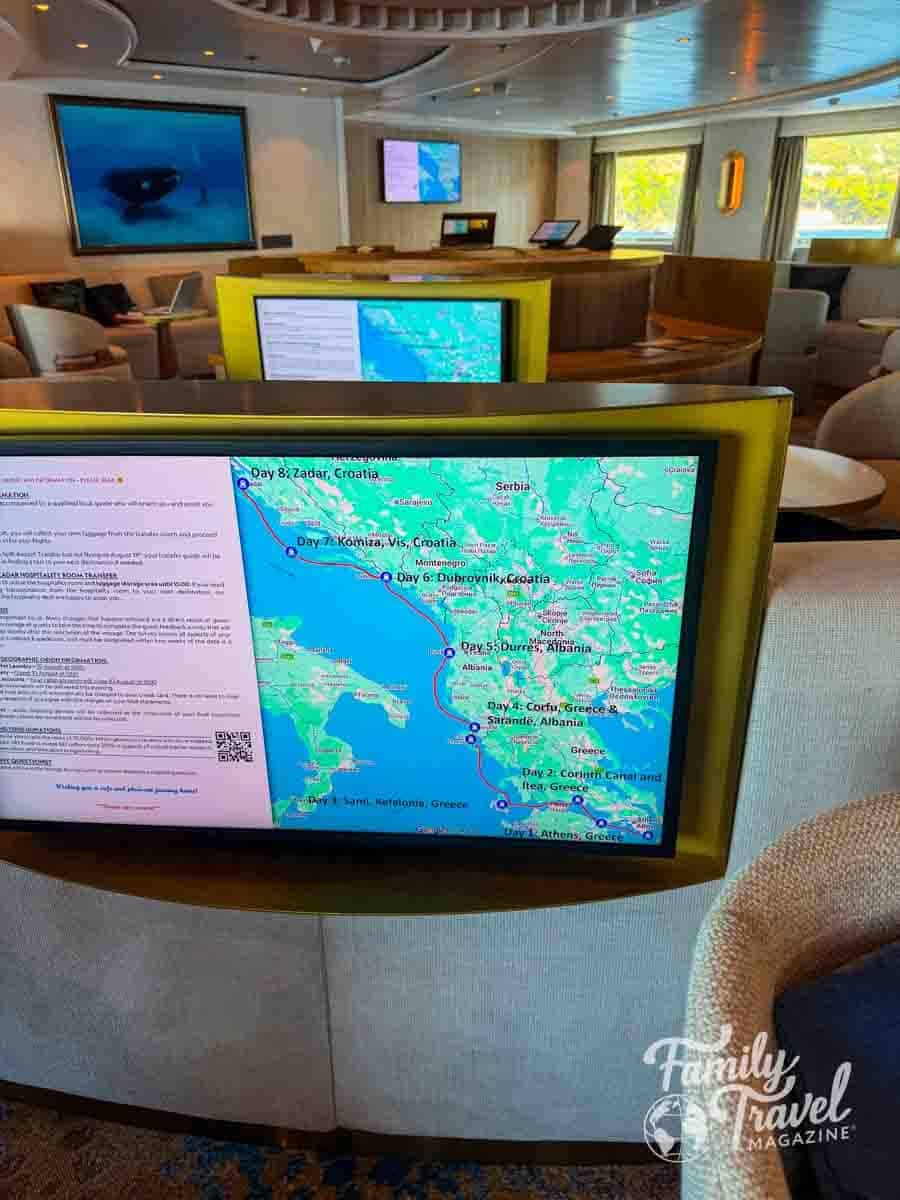
National Geographic/Lindblad Expeditions focus on education, and the daily life on the ship reflects that. Our daily excursion options were emailed a few days before our trip, and we were assigned on a first-come, first-served basis. We received our personal schedules on the first day.
The ship offers several experts on each expedition, including someone from National Geographic (our expert was a photographer), a photo instructor, naturalists (we had three), a cultural expert, a wine expert, local guides, an assistant expedition leader, and an expedition leader. The expedition leader is the closest thing to a cruise director, but the role on board the Orion is much different.
Each evening, we could have a briefing of the day, with some short presentations by some of the experts. Then, our Expedition Leader would run down the schedule for the next day, including specifics of each excursion, timing, and logistics. Before dinner, our wine expert would provide information about our wine choices for the evening. A red and a white wine were offered at no cost, and we could upgrade for an additional fee.
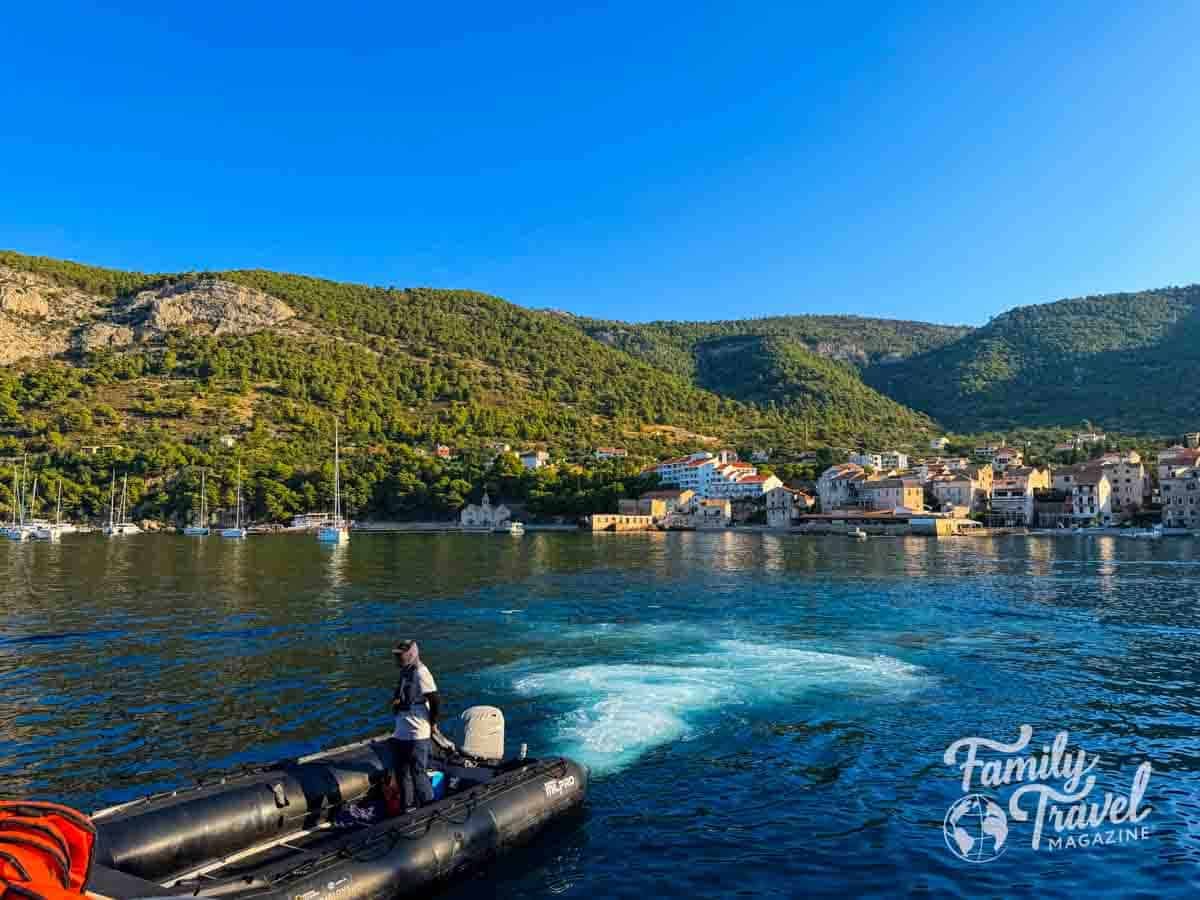
Our mornings typically started early, with breakfast. A few excursions started earlier in the day, and those guests could take advantage of the early-riser breakfast. We docked at some of the ports, but we had to take the ship's Zodiac fleet for other excursions.
When we boarded the Zodiacs, we were told what order to go in, depending on the excursion. The boats typically hold 10-11 passengers.
On the first full day, we were provided with a quick training on how to get in and out of the Zodiac. Essentially, you needed to have your lifejacket on before descending to the marine deck. Then you were called down and used your ID badge to check out. One by one, we'd enter the boat, first handing any bags to the crew. Then we'd be given a hand onto the Zodiac, handed our bag, and told to sit along the edge.
The Zodiacs became part of the excursion and were so fun to ride. Once we got to the shore, we did the same process to disembark. We left the lifejackets there to use once we returned. During our expedition, the Zodiacs ran throughout the day if you needed to go back to the ship.
In addition to the excursions, there was typically some sort of entertainment each evening. This ranged from lectures given by our experts to movie night, to trivia night, and my favorite - the crew show.
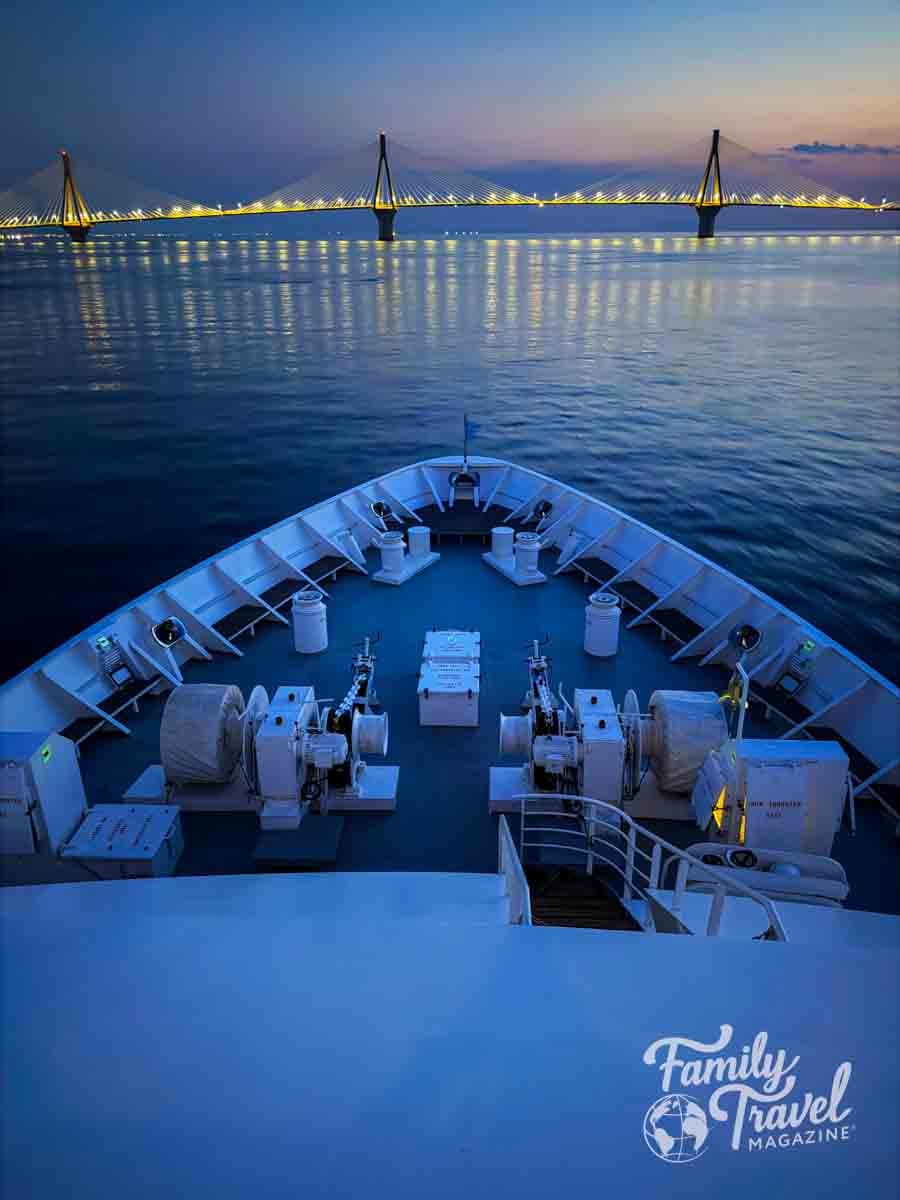
We were rarely "at sea" during days of our journey. We did pass through the Corinth Canal, which most guests stood on deck for. There were a few other times when our Expedition Leader suggested we go outside, including whenever there was a beautiful sunset and when we passed the Temple of Poseidon.
In addition, there was a day where we spent the morning in Corfu and the afternoon in Albania. But otherwise, most of the sailing was done at night, making the time onboard really efficient.
Amenities on Board
Because the National Geographic Orion is an Expedition ship and not a traditional cruise ship, the amenities are more limited. However, there are still some things to enjoy while you are on board. This includes:
- Sauna
- Hot tub
- A small gift shop
- Water refill stations
- Photography equipment to borrow
- Games and books in the library
- Laundry service (for an additional fee for most guests, but complimentary with some of the premium staterooms)
- Massage and facial services
- A dedicated doctor who traveled on excursions with us
Who Is the National Geographic Orion Best For?
This truly is a ship for those eager to experience expedition travel. It's not a traditional cruise ship and doesn't offer Broadway style entertainment, a casino, or a pool deck.
My family loved sailing on the National Geographic Orion for many reasons. The service was impeccable and we felt like family members by the time we left the ship.
Logistically, it was also the best way to see these three different countries. The Orion can sail through areas that larger, traditional cruise liners can't, like the Corinth Canal. We also didn't lose much time traveling in buses and trains. Because most of our sailing was done overnight, we'd always wake up in a brand-new destination.
It may not be the best fit for travelers looking for flashy amenities, long days at sea, kids’ clubs, huge buffets, casinos, and the more traditional onboard experience of a large cruise ship.
The Bottom Line
If you'd love exploring a new area in a hands-on, educational way, sailing on the National Geographic Orion is a fantastic option. You can learn more about the fleet on their website.
National Geographic Orion: Quick Facts
| Cruise Line | Lindblad Expeditions (in partnership with National Geographic) |
| Ship Type | Small-ship Expedition Cruise Vessel |
| Passenger Capacity | 102 guests |
| Cabins / Suites | 53 (all ocean-view staterooms) |
| Crew & Staff Ratio | ~1:1.3 (Approx. 75 crew members) |
| Onboard Experts | Expedition Leader, NatGeo Photographer, Naturalists, Undersea Specialist, Photography Educator, Wine Expert |
| Key Amenities | Observation Lounge, Main Dining Room, Outdoor Cafe, Library, Fitness Center, Spa, Sauna, Zodiac Fleet, Marina Platform |
| Vibe / Dress Code | Expedition Casual (no formal nights or dressy attire required) |
| Best For | Active travelers, history/nature enthusiasts, families with curious older kids & teens |
The National Geographic Orion is a small expedition vessel built for travelers who prioritize immersive education, expert-guided travel, and unique access over big-ship entertainment.

Leave a Reply